

By FAQ By Nurse Jessi Jessica Tonia, MSN, APRN, FNP-BC Registered Nurse | Family Nurse Practitioner | Legal Nurse Consultant
I am a Registered Nurse and a Family Nurse Practitioner.
My professional life is grounded in protecting life, preventing harm, and speaking up when systems fail.
But my understanding of what happens when people stay silent didn’t come from a textbook.
It came from my grandmother.
She was a young Polish girl during World War II. She lived through forced displacement, starvation, disease, and the constant fear that saying the wrong thing — or simply being seen — could make you disappear. She survived labor camps, refugee routes through Siberia, Persia, and Africa, and grew up knowing what it felt like to live under authorities who were never accountable to the people they controlled.
She used to say something that stayed with me my entire life:
“You never think it can happen to you — until it does.”
That sentence echoes in my mind when I think about what happened to Renée Goodand Alex Pretti.
Why This Hits Me Differently as a Nurse
Two U.S. citizens were killed during federal immigration enforcement actions in Minneapolis. In both cases, initial official explanations were quickly questioned by video evidence and eyewitness accounts.
From a nursing standpoint, this is not political commentary.
It is a failure of harm prevention and accountability.
In healthcare, when a patient dies unexpectedly, especially under restraint or force, everything stops:
- Care is reviewed
- Documentation is scrutinized
- Independent investigations occur
- Families are owed transparency
When that doesn’t happen — when institutions protect themselves first — harm multiplies.
That lesson is not new. History taught it brutally.
What My Grandmother’s Experience Taught Me About Power
My grandmother did not grow up fearing “politics.”
She feared unchecked authority.
She lived in a time when:
- Armed officials operated without explanation
- Civilians were treated as threats
- Witnesses were silenced
- Official stories rarely matched reality
People complied not because they agreed — but because resistance was dangerous.
As a nurse, I recognize this pattern clinically as moral injury: the damage done when people witness harm and feel powerless to stop it.
When I see civilians killed during enforcement actions, and when transparency is delayed or contested, I hear the same warning my grandmother lived with:
Unaccountable power always expands.
Why People Reach for Historical Comparisons
When people invoke WWII-era enforcement agencies like the Gestapo or authoritarian policing, they are not claiming history is repeating exactly.
They are identifying early warning signs:
- Militarization of civilian spaces
- Rapid use of lethal force
- Conflicting official narratives
- Institutions closing ranks instead of opening records
In nursing ethics, we are taught that patterns matter more than intent.
Patterns tell you where a system is heading.
This Is Not About Immigration — It’s About Standards of Care and Ethics
In healthcare, we do not excuse harm by saying:
“That’s just how the system works.”
We change the system.
We set standards:
- Least force necessary
- De-escalation as default
- Independent review after harm
- Transparency to the public
If healthcare operated the way some enforcement actions now do, we would call it malpractice.
Public institutions should not be held to a lower ethical standard than hospitals.
Why This Is a Public Health Issue
Fear changes behavior.
When people fear authority:
- They delay seeking care
- They avoid public spaces
- They stop reporting harm
- Communities destabilize
I’ve seen this in patients.
My grandmother lived this reality.
Public safety collapses when trust collapses.
My Call to Action — As a Nurse, FNP, and Granddaughter
My grandmother survived because others eventually spoke up — too late for many, but enough to matter.
We don’t honor history by repeating it quietly.
✅ Demand Independent Investigations
Call for transparent, independent investigations into civilian deaths during federal enforcement actions.
✅ Insist on Oversight
Support policies that:
- Limit lethal force in civilian settings
- Require timely public release of evidence
- Enforce accountability without retaliation
- Cut Funding and/or Defunct ICE
- Allow a thorough investigation and interference-free in each of the cases
- Hold those responsible for their deaths accountable so justice can prevail
✅ Stay Peaceful, Stay Visible
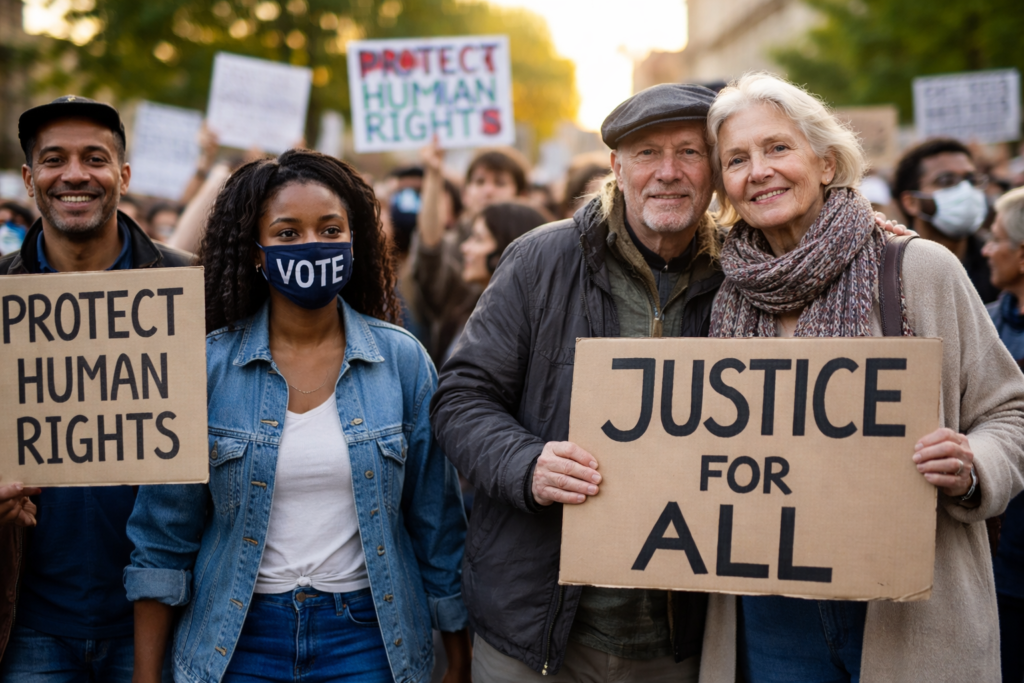
Nonviolent protest and civic engagement are safeguards — not threats.
Martin Luther King, Jr. Outline his philosophies below on Nonviolent Protest:
Key Principles of Nonviolence
King outlined six fundamental principles that guided his philosophy of nonviolent protest:
- Nonviolence is a way of life for courageous people: It requires strength to face violence with peaceful methods.
- Nonviolence seeks to win friendship and understanding: The goal is to create reconciliation rather than defeat opponents.
- Oppose evil, not the people committing evil acts: This principle emphasizes the need to focus on the injustice rather than the individual.
- Willingness to suffer without retaliation: King believed that suffering could be redemptive and a powerful tool for change.
- Avoid both external and internal violence: Nonviolent resisters must not only refrain from physical violence but also from hatred.
- Deep faith in the future: A belief that justice will ultimately prevail is essential for nonviolent activists.
✅ Share Evidence, Not Silence
In nursing, documentation saves lives. In society, transparency does the same.
Closing — From My Family to the Future
My grandmother did not survive war so her grandchildren would learn — again — what happens when people are afraid to question power.
As a nurse, I know harm doesn’t always come from malice.
Often, it comes from systems that stop listening.
Accountability is not anti-law enforcement.
It is pro-safety, pro-ethics, and pro-democracy.
— FAQ By Nurse Jessi