
By FAQ By Nurse Jessi Consulting, LLC – Family Nurse Practitioner & Legal Nurse Consultant
On October 12, 2025, a DoorDash delivery in Oswego, New York sparked widespread attention after a delivery driver, Olivia Henderson, recorded and posted a video of an unconscious, partially unclothed customer. Although Henderson later alleged she had been sexually assaulted, investigators found no evidence supporting that claim.
The incident ultimately led to Henderson’s arrest — not for assault, but for unlawful surveillance and posting a private, sensitive video online.
While the criminal case focuses on privacy and consent, the situation also provides an important educational moment from a medical-legal perspective:
What should someone actually do when they encounter an unconscious person?
What are the boundaries of privacy?
And how can misunderstanding a medical situation lead to serious legal consequences?
This blog breaks it down clearly, responsibly, and with respect to all involved.
📍 What Happened: The Facts From Public Reporting
According to police and multiple news outlets:
- On 10/12/2025, Olivia Henderson delivered food to a man’s home in Oswego, NY.
- She observed the man inside his home unconscious and partially nude.
- Henderson recorded a video of the man through the window and later posted the footage on social media.
- She reported to police that she had been sexually assaulted during the delivery.
- After investigation, the Oswego Police Department stated they found no evidence of sexual assault.
- The man was reportedly incapacitated due to alcohol consumption, according to the police.
- On November 10, 2025, Henderson was arrested and charged with:
- Unlawful Surveillance, 2nd Degree (felony)
- Dissemination of Unlawful Surveillance Image, 1st Degree (felony)
- DoorDash subsequently deactivated her account.
These are the facts as established publicly.
But beyond the headlines, this case highlights deeper issues: misinterpreting an unconscious person, crossing privacy boundaries, and misunderstanding one’s role during a possible medical event.
🧠 Key Lesson #1: An Unconscious Person ≠ Sexual Assault Scenario
As healthcare professionals, we know:
- Someone who is unconscious cannot give consent.
- Someone who is unconscious may appear vulnerable or alarming.
- But the cause of unconsciousness cannot be identified by appearance alone.
Common causes include:
- Alcohol intoxication
- Hypoglycemia
- Stroke
- Seizure
- Cardiac event
- Overdose
- Neurological issues
- Environmental factors (heat, cold, lack of ventilation)
None of these automatically equal “sexual assault.”
The Oswego case reinforces a critical point:
🔥 Misinterpreting a medical situation can lead to false assumptions, false accusations, and serious legal consequences.
⚖️ Key Lesson #2: Filming an Unconscious Person Is Illegal — Even if You Think You’re “Documenting” Something
New York’s surveillance laws are extremely strict.
Recording someone who is:
- in a private residence
- partially or fully nude
- unable to consent
- unaware they are being recorded
…without their permission is a felony, even if your intentions feel protective.
Posting the footage online makes the situation even more severe.
Henderson’s charges stem from:
- Where the video was taken (private home)
- What it showed (a nude, incapacitated person)
- How it was shared (publicly posted online)
Even if someone believes they are “exposing wrongdoing,” the law does not permit violating another person’s privacy or dignity.
This is an essential reminder for gig workers, Good Samaritans, and bystanders.
🚑 Key Lesson #3: The Correct Response When You See Someone Unconscious
If a DoorDash driver, Uber driver, neighbor, or passerby sees someone unconscious:
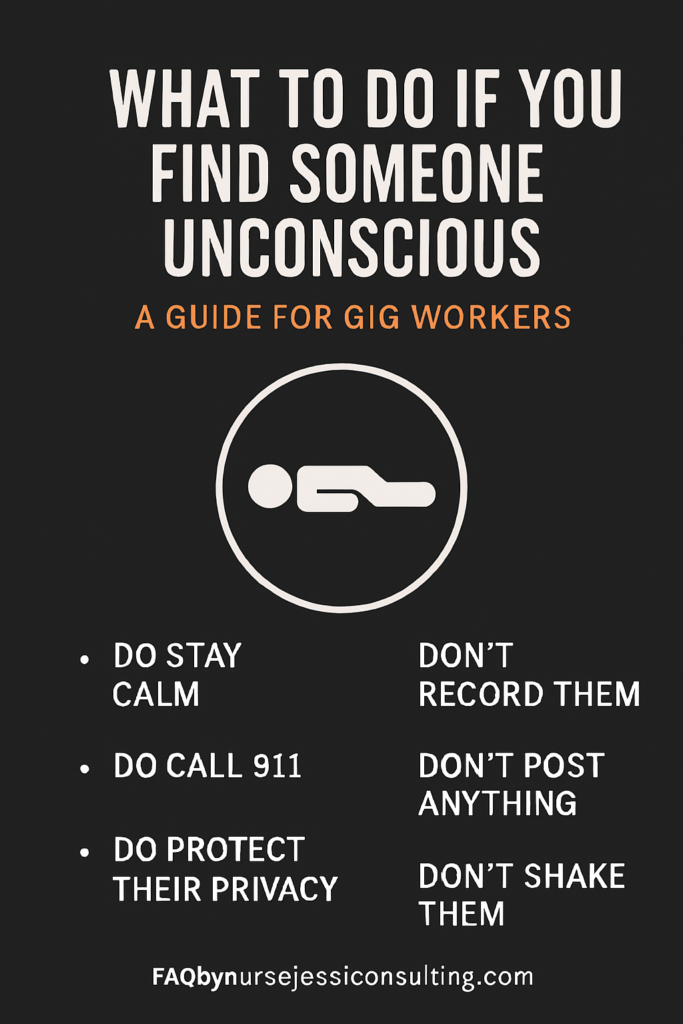
1. DO NOT record anything.
It is neither medically appropriate nor legally protected.
2. DO assess the situation from a distance.
Is the person breathing? Is the environment safe?
3. DO call 911.
Describe what you see:
- Location
- Appearance
- Whether the person responds to voice
- Whether the person appears to be breathing
4. DO stay at the scene.
You do not need to enter the home.
Let EMS handle the medical evaluation.
5. DO NOT touch, shake, or attempt to wake without dispatcher guidance.
6. DO NOT publicly post anything about the incident.
Not photos. Not videos. Not commentary.
These steps protect:
- the unconscious person
- the responder
- the integrity of any possible future investigation
- your own legal safety
🧩 Key Lesson #4: Misunderstanding an Emergency Can Escalate a Situation
Healthcare providers see this every day:
- A bystander misreads a seizure as intoxication.
- A passerby thinks an overdose is a criminal act.
- Someone mistakes a syncopal episode for assault or domestic violence.
The Olivia Henderson incident underscores this truth:
👉 When a person lacks medical knowledge or fails to consider medical possibilities, they may jump to conclusions that cause more harm than help.
This is why education is crucial — especially for people working alone in homes, apartments, and unpredictable environments.
🛑 Key Lesson #5: Know When It’s a Medical Emergency
An unconscious person may be experiencing:
- Alcohol intoxication
- Hypoxia
- Overdose
- Stroke
- Cardiac arrhythmia
- Severe trauma
- Diabetes-related emergencies
- And more
You don’t need to diagnose the cause — just recognize that any unresponsiveness is a medical emergency until proven otherwise.
A delivery driver does not have the tools or training to assess the cause.
But they can take the right steps:
📞 Call 911.
🚫 Do not film.
🚫 Do not speculate.
👁️ Observe and report.
📚 Conclusion: A Teachable Moment for Everyone — Not Just Gig Workers
The Oswego DoorDash case is tragic and unfortunate on many levels.
For healthcare professionals, legal experts, delivery workers, and the general public, it provides a clear educational takeaway:
✔️ Don’t assume the cause of unconsciousness
✔️ Don’t record or share someone in a vulnerable state
✔️ Do call emergency services
✔️ Do respect privacy and legal boundaries
✔️ Do treat any unresponsiveness as a potential medical emergency
This case should not be sensationalized.
Instead, it should be used as a public safety lesson in:
- medical awareness
- legal responsibility
- privacy
- ethical decision-making
When in doubt, always err on the side of protecting life, protecting dignity, and protecting privacy.
✅ Call to Action to FAQ By Nurse Jessi Consulting, LLC.
If your organization, legal team, or business handles cases involving unconscious individuals, emergency response failures, or misinterpreted medical situations, Nurse Jessi Consulting can help.
As a Family Nurse Practitioner and Legal Nurse Consultant, I specialize in:
- Interpreting medical events
- Reviewing timelines involving unresponsiveness
- Identifying medical vs. non-medical causes
- Translating complex clinical information for attorneys
- Providing expert insight into standard-of-care issues
If you need professional guidance on a case involving medical emergencies, impaired individuals, gig-economy encounters, or healthcare deviations…
👉 Schedule a consultation at:
Your case deserves clinical accuracy, ethical clarity, and expert support.