

By FAQ BY Nurse Jessi Consulting, LLC.
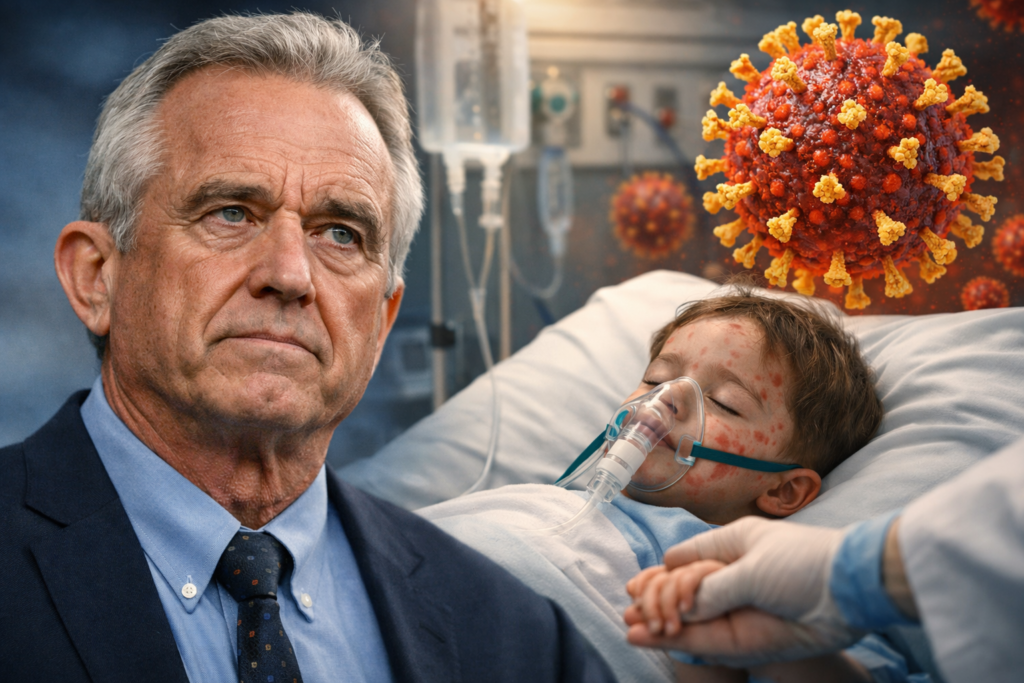
The United States is witnessing the re-emergence of measles — a vaccine-preventable disease once declared eliminated domestically. From a clinical and public-health perspective, this trend is neither abstract nor political. It is an epidemiological warning sign with direct implications for pediatric morbidity, healthcare system strain, and preventable mortality.
Declining vaccination coverage, driven largely by persistent vaccine misinformation and growing hesitancy, is the central factor behind renewed outbreaks. Policy decisions and public messaging from national leaders play a significant role in shaping vaccine confidence. When those messages amplify doubt or minimize risk, the downstream effects become clinically visible.
Measles Is Not a Benign Childhood Illness
Measles (rubeola) is among the most contagious infectious diseases known, with a basic reproduction number (R₀) estimated between 12 and 18 — substantially higher than influenza or SARS-CoV-2. Transmission occurs via airborne spread, and viral particles can remain suspended in the air for up to two hours after an infected individual leaves a space.
Clinically, measles is a systemic viral infection with potentially severe consequences:
- Pneumonia — the leading cause of measles-related death in children
- Encephalitis — associated with seizures, permanent neurological injury, and fatality
- Subacute sclerosing panencephalitis (SSPE) — a rare but universally fatal late complication
- Immune suppression (“immune amnesia”) — increasing susceptibility to secondary infections
- Hospitalization — common in young children and immunocompromised patients
Even in high-income countries with advanced medical care, measles can result in permanent disability or death. The perception of measles as “mild” is inconsistent with decades of clinical data.
Vaccination: A Proven, High-Efficacy Intervention
The measles-mumps-rubella (MMR) vaccine remains one of the most effective preventive tools in modern medicine:
- Two doses ≈ 97% efficacy against measles infection
- Extensive longitudinal safety data across multiple decades
- Strong protection not only for individuals but for community transmission control
Measles elimination in the United States was achieved through sustained high vaccination coverage. The current resurgence reflects erosion of that coverage — not failure of the vaccine itself.
The Role of Public Messaging and Policy Signals
Vaccine uptake is highly sensitive to trust. Public-health history repeatedly demonstrates that when influential figures question vaccine safety without robust scientific support, population-level effects follow:
- Increased parental hesitancy
- Geographic clustering of under-vaccinated populations
- Loss of herd immunity thresholds (≈ 95% for measles)
- Outbreak amplification
Clinical medicine is downstream of these forces. Pediatric admissions, preventable complications, and outbreak management burdens are not theoretical outcomes — they are measurable consequences.
Mixed or skeptical messaging surrounding vaccines, especially from senior health officials, creates ambiguity where medical consensus is clear. Uncertainty in public perception translates directly into vulnerability in pediatric populations.
Why Children Bear Disproportionate Risk
Children are uniquely vulnerable in measles outbreaks:
- Infants may be too young for full vaccination
- Immunocompromised children may be unable to receive live vaccines
- Complication rates are highest among young children
- Exposure risk increases when community immunity declines
Infectious diseases exploit immunity gaps. When vaccination rates drop, outbreaks do not distribute risk evenly — they concentrate harm among those least able to protect themselves.
Healthcare System Impact
Measles outbreaks generate cascading effects beyond individual cases:
- Emergency department surges
- Isolation and containment resource demands
- Contact tracing burdens
- School and childcare disruptions
- Increased risk for hospitalized vulnerable patients
Preventable outbreaks divert finite clinical resources away from other urgent care needs. This is a systems-level patient safety issue.
A Clinical and Ethical Imperative
Vaccination is not solely a personal health decision; it is a collective risk-management strategy grounded in epidemiology. The return of measles represents a failure of prevention — not a failure of treatment capacity.
From a clinical ethics perspective, allowing misinformation or policy ambiguity to undermine vaccine confidence exposes children to avoidable harm. Preventive medicine functions only when public trust aligns with scientific evidence.
Call to Action for Parents, Clinicians, and Communities
For Parents & Caregivers
- Ensure children receive recommended MMR vaccinations on schedule
- Seek information from evidence-based medical sources
- Recognize that measles complications are real, not historical artifacts
For Healthcare Professionals
- Engage patients with clear, confident vaccine counseling
- Address misinformation directly and empathetically
- Reinforce the clinical realities of vaccine-preventable diseases
For Policymakers & Public Leaders
- Align messaging with established scientific consensus
- Avoid amplifying unsupported safety concerns
- Recognize that communication influences disease outcomes
- RKF Jr. Needs to Resign
Measles resurgence is not inevitable. It is preventable. The tools, data, and clinical experience are already available. What remains essential is maintaining the integrity of public-health communication and preserving confidence in one of medicine’s most successful interventions.